
Preston is exactly the kind of suburb where smart locks make immediate, practical sense. The suburb’s demographic — young professionals and dual-income households commuting on the Mernda Line or the No. 11 tram, renters moving through on shorter tenancies, homeowners who’ve invested in a renovation and want their security hardware to match — creates the conditions where managing physical keys is a daily friction point rather than a background consideration.
A smart lock removes that friction. PIN code access or phone app unlock instead of fumbling for keys at the end of a long day. Remote management for tradespeople during a renovation. Time-limited access for cleaners or housesitters. The ability to confirm the door is locked without turning around at Preston Station.
Here’s a practical, honest guide to smart lock installation specifically for Preston’s housing stock — what works, what the compatibility questions are, and what to watch out for before you spend on hardware.
What Preston’s Housing Stock Means for Smart Lock Compatibility
Preston’s residential properties span four distinct housing types, each with different smart lock compatibility considerations.
Victorian and Edwardian weatherboard cottages (west of High Street, around Bruce Street, Gilbert Road): these properties typically have external doors with non-standard backsets — the distance from the edge of the door to the centre of the lock cylinder varies by original fitting, and original mortice lock cases are not compatible with most smart lock retrofit hardware without modification. A compatibility assessment before purchasing any hardware is essential. The door construction is also worth reviewing: original weatherboard cottage doors can be hollow-infill construction behind the external cladding, which affects which mounting hardware will hold securely.
Post-war brick homes (the mid-suburb grid, east Preston, around Murray Road): these properties typically have been fitted with at least one generation of replacement locks since the original installation. More likely to have a standard 60mm backset deadlock that fits smart lock retrofit adaptors without modification. Door construction is solid, which is a positive for installation quality.
Terrace houses and townhouses (around Bell Street, newer infill developments): often have more standardised contemporary lock hardware, particularly in newer builds. Best compatibility situation for smart lock installation.
Apartments and low-rise units (scattered through the suburb, concentrating around the Preston Market precinct and major arterials): require additional consideration around body corporate rules and building entry systems. See the apartment section below.
Pro Tip: Before buying any smart lock hardware for a Preston property, measure your existing deadlock’s backset (distance from door edge to cylinder centre) and confirm the door is solid-core — these two measurements determine compatibility with the retrofit adaptors that suit most residential installations.
The Two Main Smart Lock Types for Preston Properties
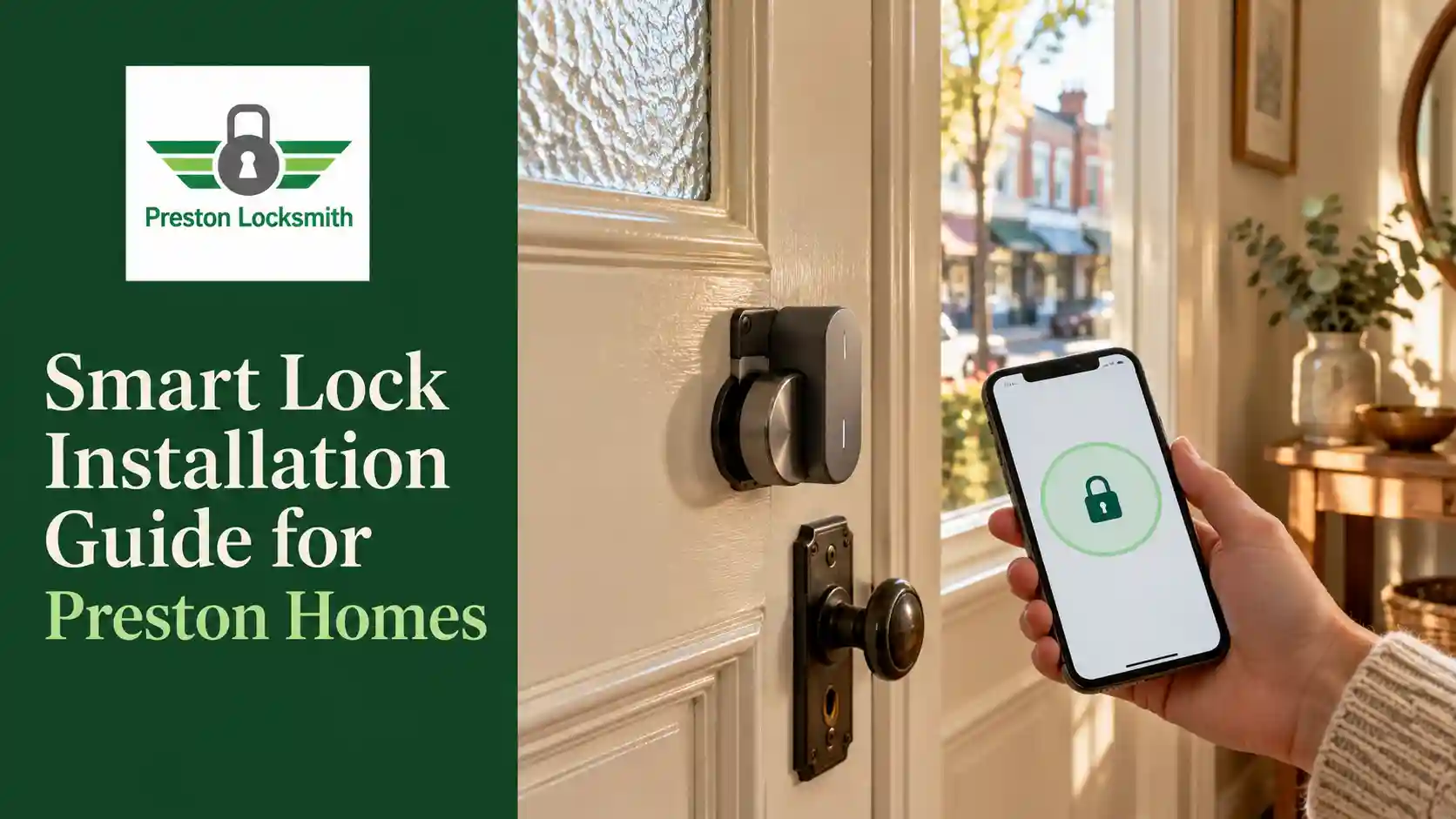
Retrofit cylinder adaptors fit to the inside face of your existing deadlock, motorising the cylinder turn function while leaving the external hardware completely unchanged. The keyhole, handle, and visible hardware on the outside of the door are identical to what was there before — only the inside mechanism changes. The adaptor adds PIN access, phone app control, and usually NFC fob access. Remote access (locking/unlocking from the office, or from the Preston train on the way home) requires a model with Wi-Fi or a separate bridge device; Bluetooth-only adaptors require the controlling phone to be near the door.
Correct choice for: renters (with landlord permission — the external appearance is unchanged), homeowners who want to preserve the external hardware aesthetics of a period Preston property, and properties where body corporate rules limit modifications to the common-area face of the door.
Full replacement smart deadlocks replace the existing cylinder and external hardware with a new combined unit. External features include keypads, fingerprint readers, and in some models a display. Best choice for owner-occupied properties where the existing hardware is low quality, where external keypad access is specifically wanted, and where no heritage or body corporate constraints apply.
Remote Access: Why It Matters for Preston’s Commuter Households
The dual-income, Mernda Line-commuting Preston household is precisely the use case remote access is designed for. The ability to confirm the front door is locked from a phone — sitting at Preston Station, queued for coffee on High Street, mid-morning at the CBD office — removes a low-level but persistent anxiety that most of us who’ve locked up in a hurry are familiar with.
Remote access also enables managed entry for tradespeople, cleaners, and regular visitors without physical key distribution. A time-limited PIN that expires at 5pm today, a recurring access code for the cleaner on Tuesday mornings, a one-time remote unlock for a delivery that requires a signature — all of these are standard features on current-generation smart locks with remote connectivity.
For Preston’s 40% renter population, the access management benefit is sometimes the primary motivation. A shared house where housemates move in and out on staggered tenancy dates, where each person needs access and key management is an ongoing inconvenience, is a natural fit for a smart lock with individual PIN codes per person. A departing housemate’s access code is deleted in thirty seconds; no key collection required.
Pro Tip: For a Preston share house, choose a smart lock model that supports at least 10 separate user codes — this gives you enough codes for all current residents plus regular visitors without managing a waiting list, and codes can be named so you can see who accessed the door and when.
The Apartment Question in Preston
Preston’s apartment and unit stock — accounting for 18.3% of dwellings, concentrated around the Preston Market precinct and major arterials — introduces considerations that freestanding house installations don’t have.
Body corporate rules: the owners corporation rules for most Preston apartment buildings govern modifications to the external appearance of individual lots. A smart lock that changes the visible hardware on the door as it faces the common hallway may require body corporate approval. A retrofit adaptor that modifies nothing visible from the hallway is the most straightforward path to compliance.
Building entry systems: Preston’s apartment buildings typically have a building entry via intercom and either key fob or code. The individual apartment door is a secondary security layer. Smart lock installation at the apartment door works within this structure without needing to interact with the building’s common systems.
Rental apartments: a smart lock retrofit on a rental property requires landlord written approval, regardless of body corporate rules. In practice, many Preston landlords are receptive when the adaptor visibly changes nothing about the external hardware and the tenant proposes to remove it at the end of the tenancy. Having the conversation with documentation — a written request, the landlord’s written approval — protects both parties.
Battery Life, the Physical Override, and What Happens When It Fails
Smart lock battery life on current-generation quality products ranges from 6 to 18 months under normal residential use. Low-battery warnings are pushed to the app well before the battery is depleted — typically when 20-30% capacity remains, which provides weeks of notice for a battery replacement.
The physical override key — a conventional cylinder that accepts a mechanical key, present on every reputable smart lock — is the backup for complete battery failure or system malfunction. This key needs to be accessible outside the locked property. For a Preston household, a trusted neighbour, a family member with a spare, or a key lockbox mounted in an inconspicuous external location are all viable options. The key lockbox option also solves the scenario where a guest or tradesperson needs access when the app isn’t available to manage remote unlocking.
Connectivity failures: a smart lock that depends on a cloud platform for remote management is vulnerable to that platform being unavailable (server outages) or discontinued (some brands have shut down their platforms, stranding users with locks that could no longer be remotely managed). Choosing a brand with at least five years of established Australian market presence, and confirming the product can still operate locally (PIN, fob, physical key) without the cloud connection, protects against this scenario.
A High Street-Adjacent Installation: How It Went
I was called to a property on a side street off High Street — one of the original weatherboard cottages that have been renovated thoughtfully, a young professional couple who commuted daily and wanted to stop worrying about keys. The front door had been fitted with a new composite replacement during a renovation, with a quality 60mm backset deadlock — ideal for a retrofit adaptor.
The rear sliding door to the deck had its own separate lock. We fitted a retrofit smart lock adaptor to the front entry deadlock, configured three user codes (one per person, one for a regular housesitter), and connected it to the home’s Wi-Fi for remote access. The physical backup key went to the neighbour next door, with their agreement.
Total installation time: ninety minutes including configuration and app setup. The existing quality cylinder stayed in place — the adaptor motorises it from inside. External appearance: unchanged. The couple has been able to confirm lock status remotely and manage access for trades during a subsequent minor bathroom renovation without distributing physical keys to anyone.